
What is Prosthetic Dental Treatment? How is it Applied?
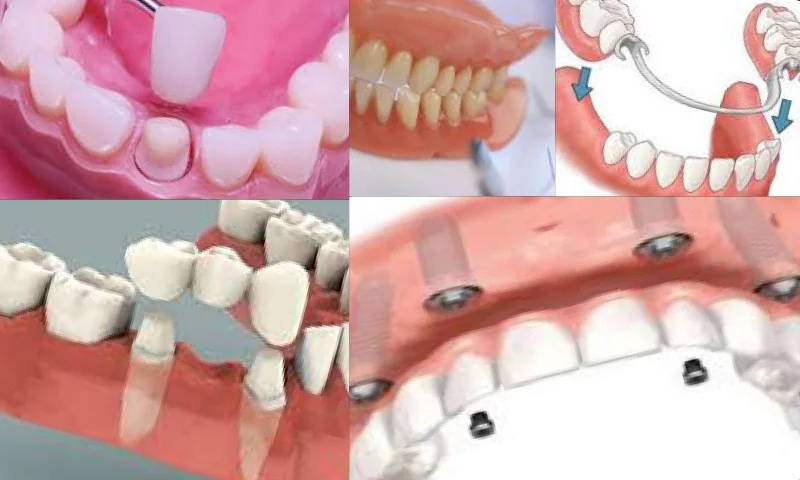
Types of Prosthetic Dental Treatment
Prosthetic dental treatment is the term for the method applied to create a substitute for lost teeth and surrounding tissues. Tooth and tissue losses, due to various reasons, affect patients psychologically, aesthetically, and functionally. Dental prostheses allow patients to have an aesthetic smile, self-confidence, and the ability to perform daily activities comfortably. With the applied treatment methods, artificial teeth are placed in the position of missing teeth. Dentists choose the procedure to be applied to correct tooth or tissue deficiencies. There are also many types of prostheses. The type of prosthesis to be used is decided after examinations.
1. Fixed Prostheses
Prostheses cemented onto roots, natural teeth, or dental implants are called fixed prostheses. These cannot be removed by patients as they are cemented. Porcelain veneer teeth are defined as fixed prostheses. In the application of fixed prostheses, metal or zirconium is used as the substructure material. Bridge treatments and crowns, which we make by reducing the size of adjacent teeth, are considered fixed prostheses.
2. Removable Prostheses
Even if teeth are lost due to various factors, prosthesis application can be made if gums and bones are present. We determine the number of missing teeth and place the prosthesis by taking support from these gums and bones. It may take time for patients to adapt to removable prostheses. Patients may experience difficulty, especially while eating. To allow the tissues to rest, the prosthesis should only be used during the day. Removing it from the mouth at night helps prevent various microbial infections. Their larger size compared to fixed prostheses is to ensure the prosthesis stays in the mouth.
3. Complete Dentures
Also known as complete dentures, this method is applied when there are no teeth left in the mouth. The prosthesis is seated on the tissue surface, and force transmission is provided. The prosthesis made is fully seated on the bones and gums. In cases of tooth loss, we decide on the treatment method after a preliminary examination of our patients. With the advancement of technology, we can also use implants in fixed, removable, or complete dentures.