
Retaining Walls
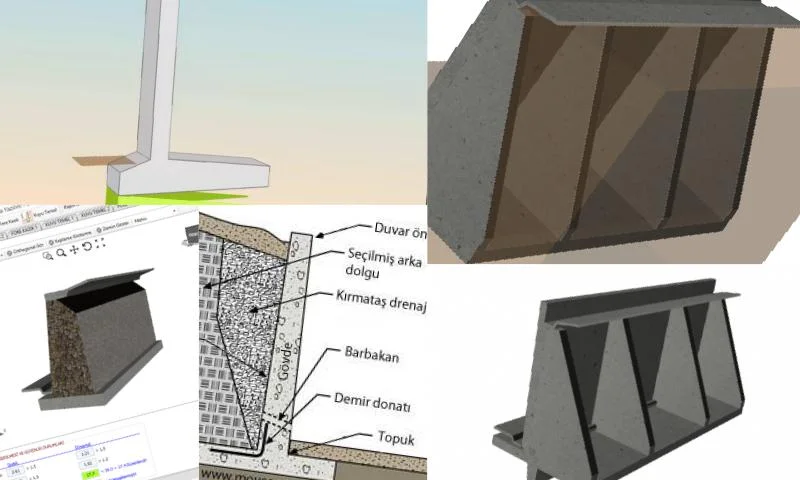
Retaining walls are structures made of stone, reinforced concrete, and similar materials, manufactured to prevent the collapse of soil fills, large masses of earth, floodwaters, or falling materials such as stones and rocks from heights. They can be constructed from different materials and with different designs according to various requirements. Before construction, soil surveys and geotechnical reports must be prepared. In addition to these processes, the thrust load that the ground will exert on the wall as a fill area and the approximate load amount are calculated. With the help of calculation programs developed within the scope of this information, retaining wall calculations can be easily made.
Types of Retaining Walls
Retaining walls vary according to the area where they will be built and their purpose. At the same time, different materials and methods can be used to reduce costs by performing cost calculations. The oldest retaining walls were made of stones or adobe. Stone retaining walls are still used in many areas today. In addition to these, gravity retaining walls, reinforced concrete retaining walls, and prefabricated retaining walls are used. Retaining walls can also appear as systems that prevent soil deformations, such as diaphragm walls. Apart from these, stone retaining walls can be encountered as construction of retaining walls from rough-hewn stone and construction of retaining walls from mortared rubble stone. Reinforced concrete retaining walls, on the other hand, can be quite extensive and detailed according to the need.
Considerations for Retaining Walls
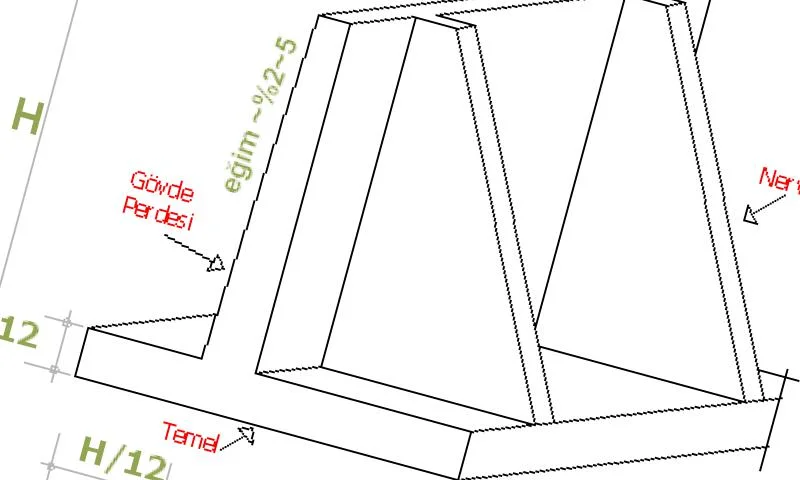
When constructing a retaining wall, it is necessary to ensure its long service life in accordance with its purpose. In this direction, retaining wall types should be supported with different apparatus, i.e., different applications. For example, in reinforced concrete structures, cantilever elements can be used to reduce weight, while the method of anchoring to the ground prevents the sliding or overturning of prefabricated reinforced concrete retaining walls. In addition, artificial drainage systems can be created to allow water to flow over the wall without causing damage, thus preventing erosion at the base of the wall.