
What is Carbon Black?
Why is Carbon Black Used in Rubber Production?
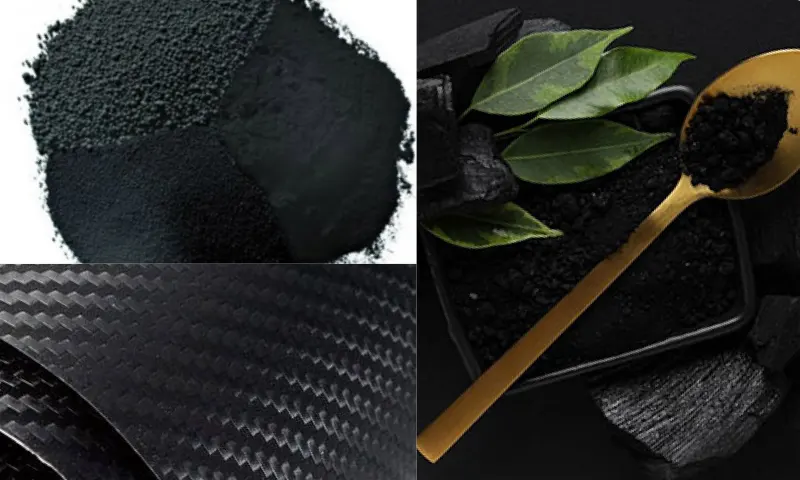
Carbon Black is a fine-grained form of carbon obtained from the controlled combustion of organic matter. It is widely used in industry as a black pigment and to increase durability in rubber products. Thanks to its high surface area and porous structure, it is preferred in many sectors. This substance is particularly important as an additive in the automotive, plastics, and paint industries. Natural gas or petroleum derivatives are used in its production, and the resulting particles are chemically stabilized. This gives Carbon Black a long-lasting and resistant structure. Properties such as color intensity and UV resistance distinguish it from other fillers. You can visit the web address https://quadrokimya.com/urunlerimiz/karbon-siyahi/ for detailed information about Carbon Black.
What are the Physical Properties of Carbon Black Material?
Carbon Black is one of the most important reinforcing fillers in rubber production. It increases the hardness, tensile strength, and abrasion resistance of rubber, extending the product's lifespan. Especially in tire production, the addition of Carbon Black reduces rolling resistance and improves road holding performance. It also strengthens the rubber's resistance to heat. These properties allow tires containing Carbon Black to operate at high temperatures without deforming. Carbon Black forms bonds between rubber molecules thanks to its microscopic structure, providing both flexibility and durability simultaneously. Therefore, it is an indispensable component in automotive and industrial tires. Carbon Black is known for its high surface area, low density, and sub-micron particle size. As the particle size decreases, the surface area increases, which strengthens its interaction with rubber. The surface of the material is amorphous carbon, and this structure increases Carbon Black's light absorption capacity. Its resistance to high temperatures also makes it valuable in industrial applications. Its low thermal conductivity makes it preferred in insulation materials as well.